How Medieval Tapestries Were Made: Wool, Silk, Dyes, and Workshop Practice
A practical introduction to late medieval tapestry making: cartoon design, warp and weft, wool and silk, colour, workshops, and why the medium still rewards close looking.
Reviewed and updated
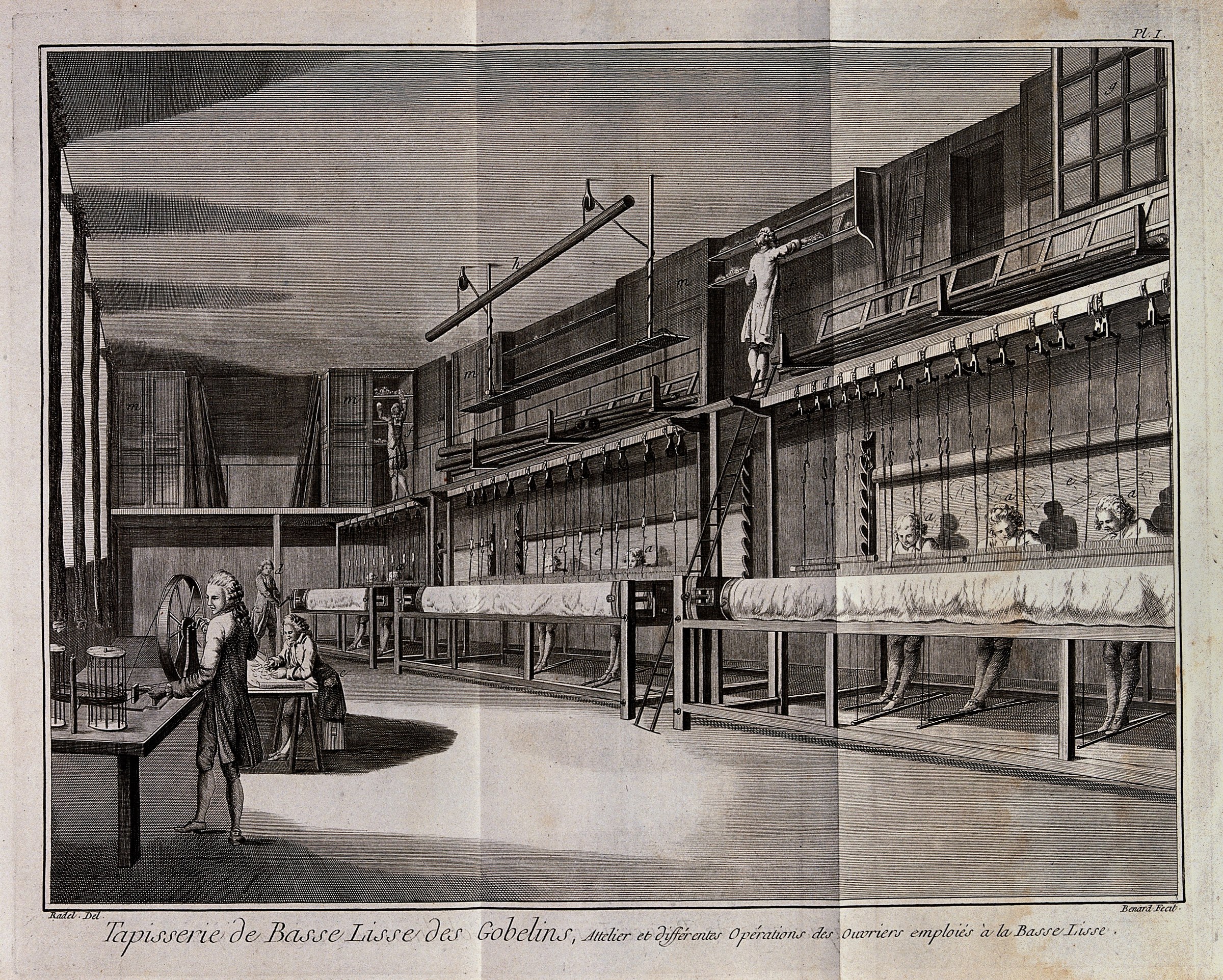

A medieval tapestry is not a painting transferred to cloth. It is an image built thread by thread on a loom, usually by several specialist weavers working from a full-scale design. That slow, technical process helps explain why historic tapestries can feel so different from printed wall hangings: their colour, outlines, and texture are structural parts of the fabric.
Start with a design at full scale
The workshop began with a cartoon, a detailed drawing made at the intended size of the tapestry. It supplied figures, architecture, plants, animals, and the colour plan. The weavers did not simply copy it like a poster. They translated it into interlocking areas of coloured thread, deciding how closely to follow contour lines and how to handle small details that could not be woven at the same precision as a painted line.
Because a tapestry is made from the reverse side on a loom, lettering and some directional details could appear reversed in the finished work. This is one reason museum catalogues and close photographs are so valuable: they reveal decisions that are easy to miss when a tapestry is treated only as an illustration.
Warp gives strength; weft creates the picture
Long, taut warp threads formed the skeleton of the cloth. In late medieval European workshops these were commonly wool or linen. The coloured weft passed over and under the warp and created the visible image. A tapestry weaver could use wool for broad areas and silk for bright highlights, sheen, or fine passages. Gold- or silver-wrapped threads sometimes signalled luxury in garments, heraldry, or sacred-looking details.
The basic structure is called plain weave, but the visual effect is anything but plain. Weft threads change colour wherever a shape changes. At the edge of two colour areas, the weave can leave tiny vertical gaps called slits; those may be sewn afterward. Looking closely at a reproduction, notice whether the design feels made of colour blocks and stepped contours. That is closer to tapestry logic than a smooth photographic print.
Why wool and silk behave differently
Wool is resilient, accepts dye well, and gives a soft, matte surface. Silk catches light and can make a sleeve, flower, or animal detail appear to flicker as the viewer moves. The mix is important in unicorn tapestries, where pale animals, elaborate costumes, and densely planted backgrounds rely on contrast more than on a single flat colour.
Fibre also shapes conservation. Light exposure can fade dyes and weaken silk, while stress on the cloth can distort the weave. Historic tapestries are therefore usually displayed in carefully controlled conditions, with support across a broad area rather than from a few points.
Colour came from skilled dye work
Before weaving began, yarn had to be dyed. Sources such as woad, madder, weld, cochineal, and indigo could produce blues, reds, yellows, and complex over-dyed greens or purples. Results varied with fibre, water, mordants, and repeated dye baths. A great tapestry workshop depended on this colour knowledge as much as it depended on drawing.
This helps explain why the palette of an old tapestry is not a fixed historical fact. Centuries of light, repair, cleaning, and fibre ageing change what survives. A modern reproduction can be useful for studying composition, but it should not be assumed to reproduce the original colour exactly.
Workshops turned painting into fabric
Late medieval tapestry production involved patrons, designers, merchants, dyers, and weavers. Major centres in the Low Countries became particularly important because they combined skilled labour, access to materials, and wide courtly markets. Large sets were expensive, portable symbols of status: they could warm a stone room, transform a ceremonial interior, and carry a family’s taste or political message from place to place.
The scale of a narrative cycle also changes how it should be read. The Hunt of the Unicorn and the Lady and the Unicorn are not only individual pictures. Their figures, borders, animals, and backgrounds are part of a sustained visual world. Differences between panels can reflect changes in the design, workshop hands, later alteration, or the practical challenge of weaving a large object over time.
Details worth noticing on any tapestry
When looking at a historic tapestry—or a high-quality museum image—start with a few concrete questions:
- Where do the outlines become stepped or slightly irregular? Those are often clues to woven construction.
- Which areas appear matte and which catch the light? Fibre choice may be doing narrative work.
- Do flowers, leaves, and small animals form a repeated field, or do they guide attention toward the figures?
- Is a border merely decorative, or does it frame a coat of arms, a scene, or a change in scale?
These questions make the medium more visible. Instead of seeing a tapestry as an old picture with a unicorn on it, you begin to see a designed textile: a collaborative object in which material, storytelling, and display all meet.
Further reading
For a close look at how technique supports iconography, continue with the unicorn tapestry guide and the overview of medieval unicorn tapestry motifs. Museum collection records are especially useful when comparing a modern reproduction with the surviving historic object.