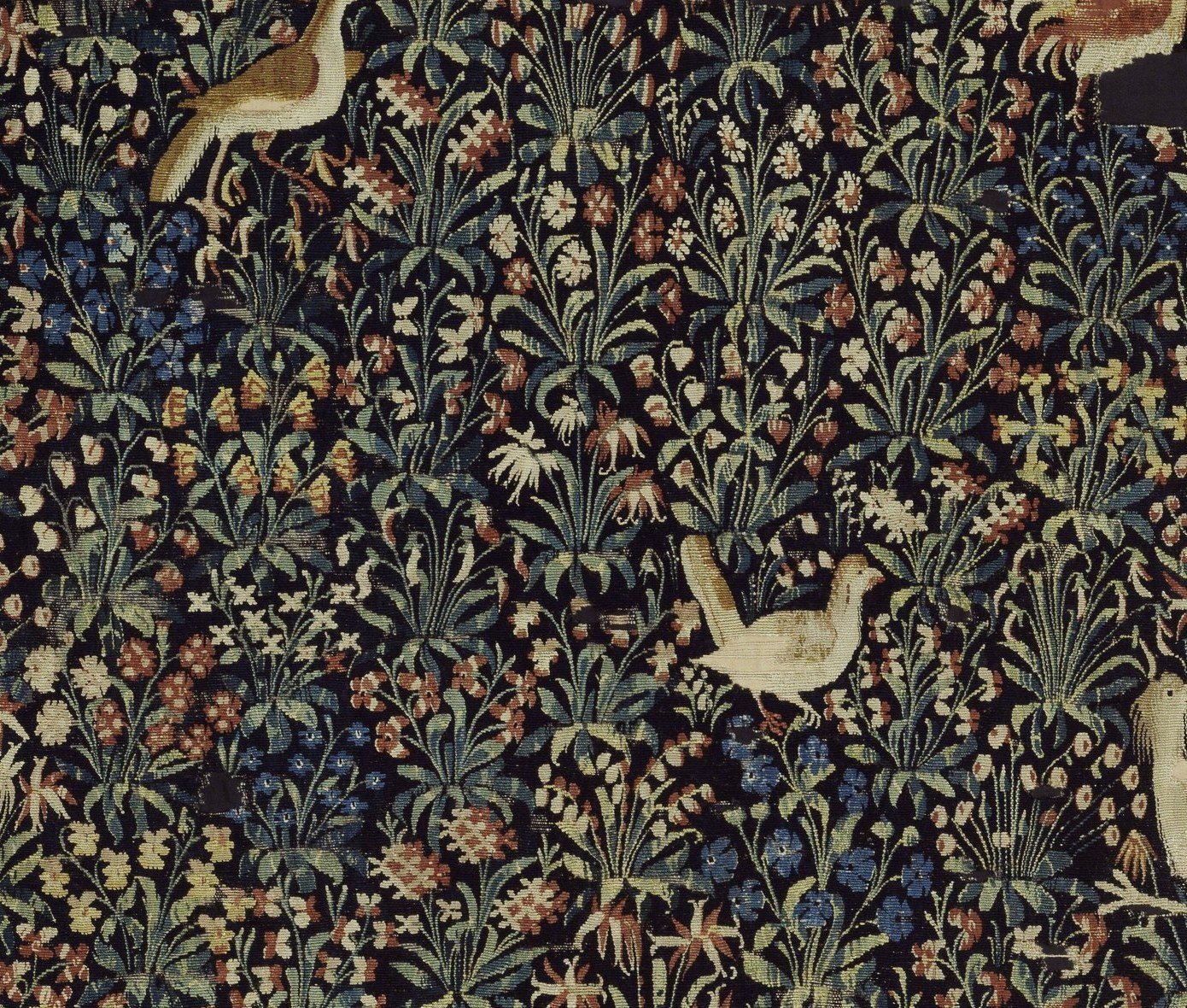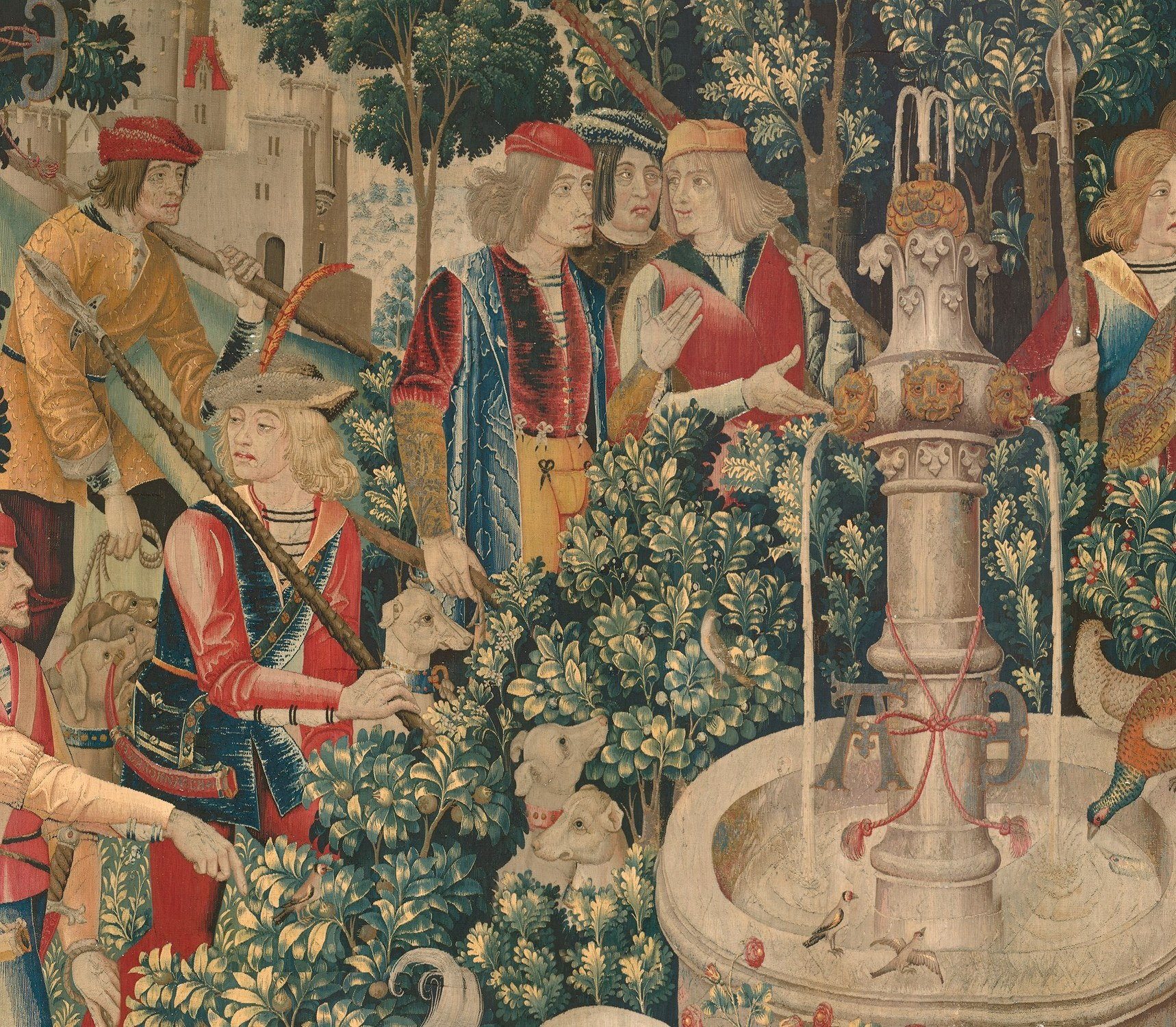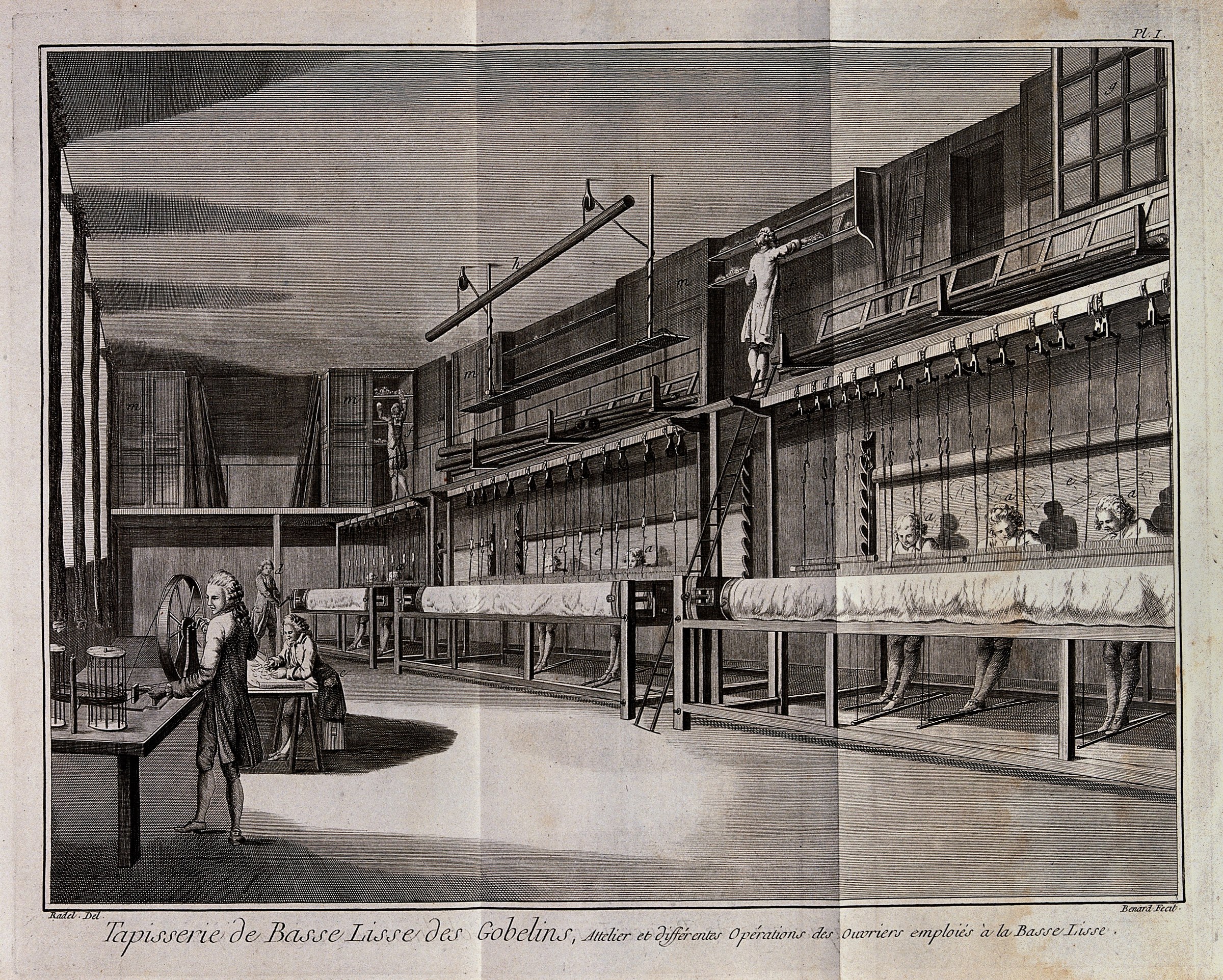
Four details, four investigations

Follow your curiosity

Begin with something visible. Each guide follows one detail before asking what it might mean.

One image, three different things

From woven object to museum image to modern wall

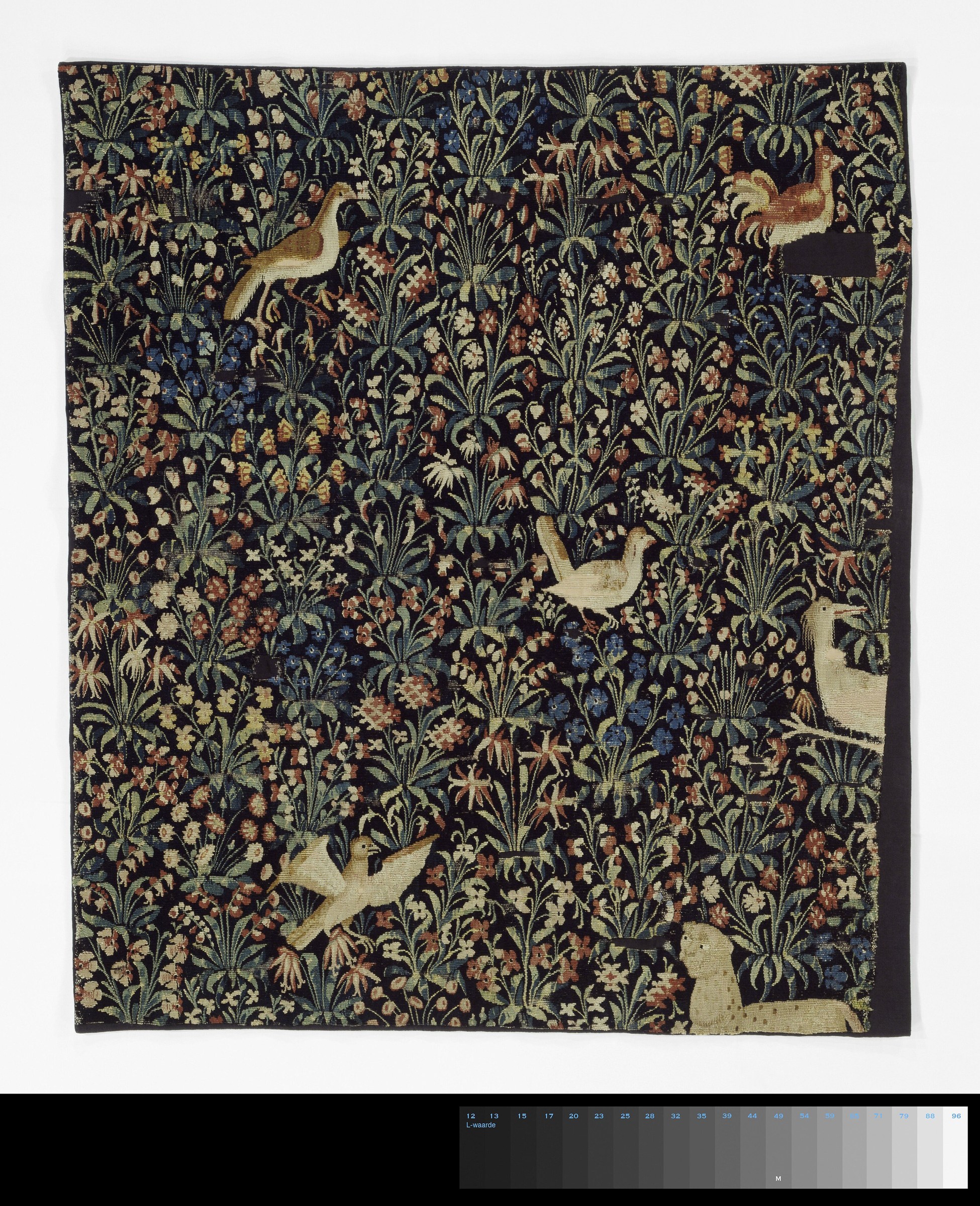
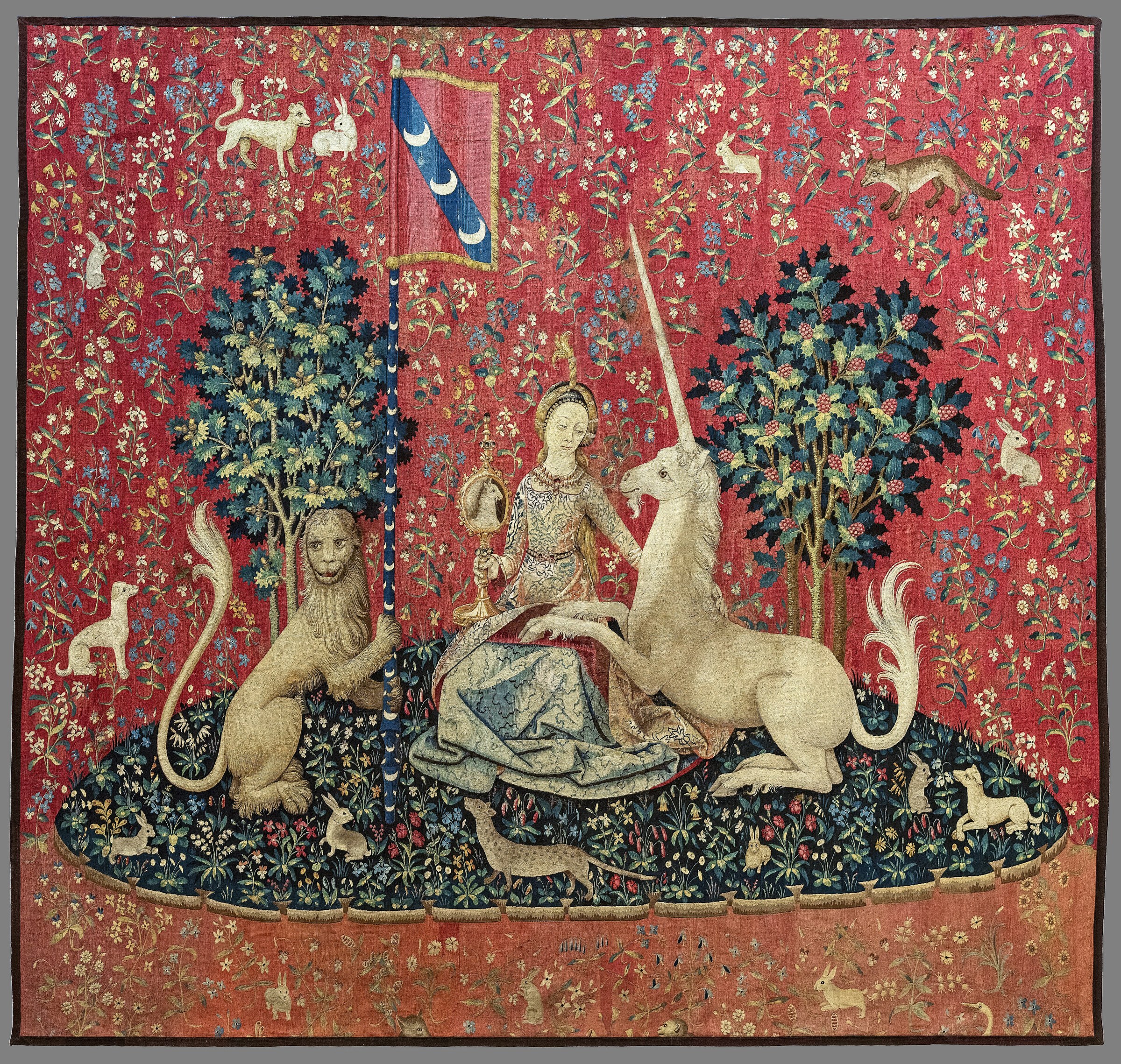
A historic tapestry, its digital photograph, and a luxury printed decorative wall hanging can share a composition without being the same kind of object.

The useful question changes at each step. Museum records describe historic objects; image records document files; product specifications describe modern goods.

The Hunt of the Unicorn

A story told in seven scenes

Move through the cycle from the first glimpse in the woods to its strange, unforgettable ending.
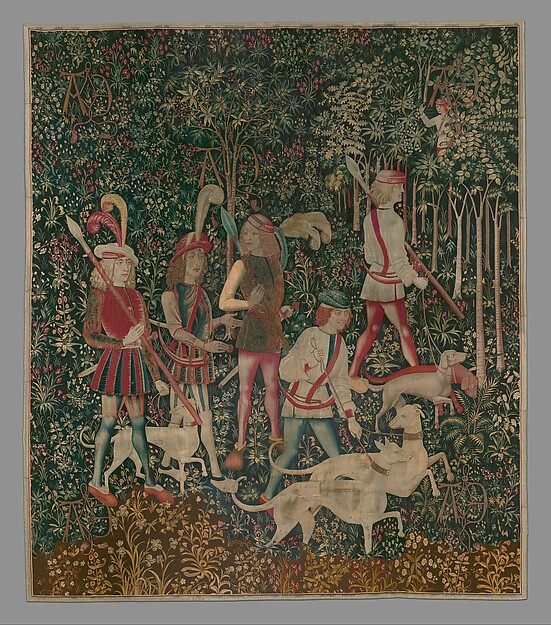
Hunters and hounds entering a wooded landscape in the Unicorn Tapestries I
Enter the woods

The hunt begins

Open the scene  →
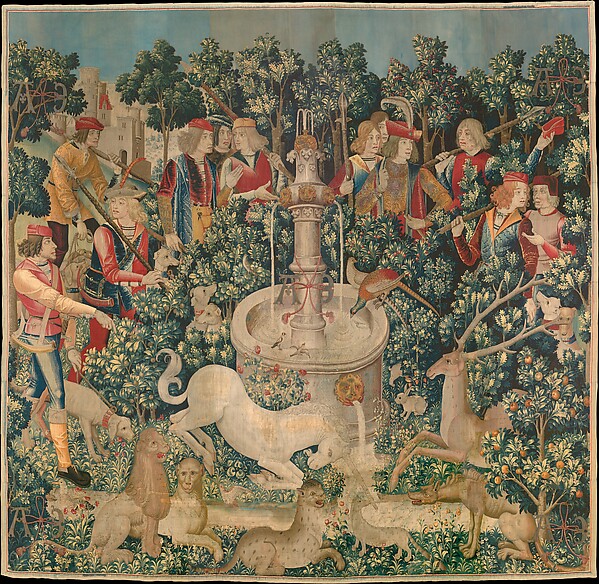
The unicorn beside a fountain surrounded by animals II
At the fountain

The unicorn is found

Open the scene  →
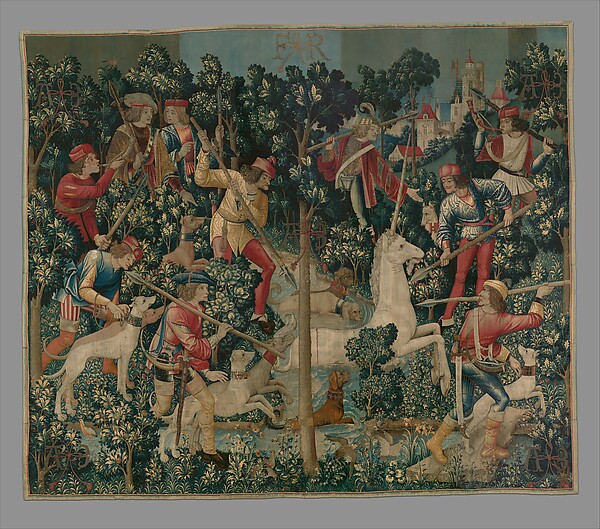
The unicorn leaping through a stream as hunters approach III
The chase quickens

Across the stream

Open the scene  →
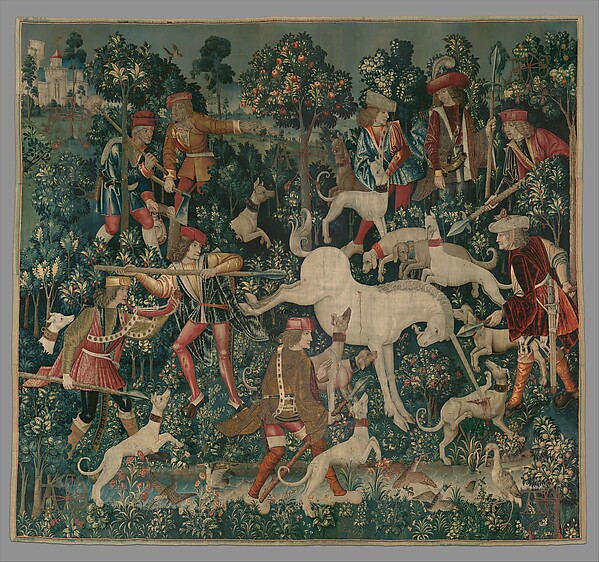
The unicorn defending itself against hunters and hounds IV
A fierce defence

The unicorn fights back

Open the scene  →
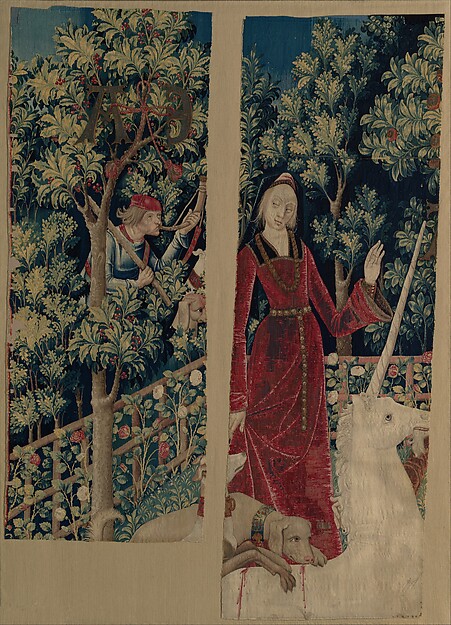
The unicorn resting beside a maiden in a fragment of the tapestry cycle V
A mysterious capture

The maiden appears

Open the scene  →
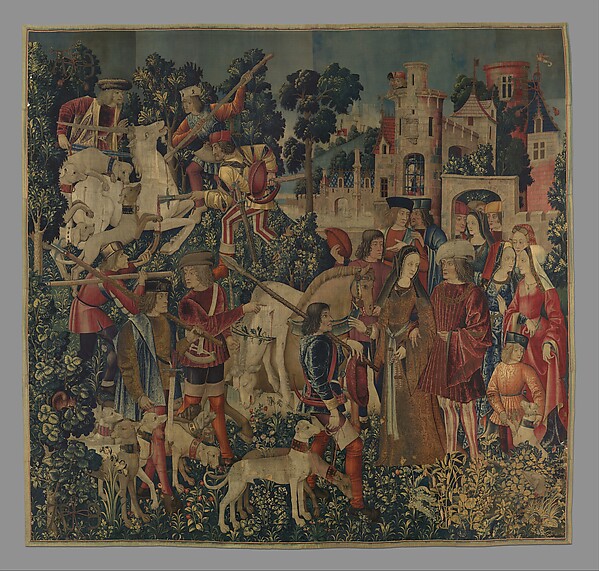
Hunters returning with the unicorn before a castle VI
The procession

Return to the castle

Open the scene  →
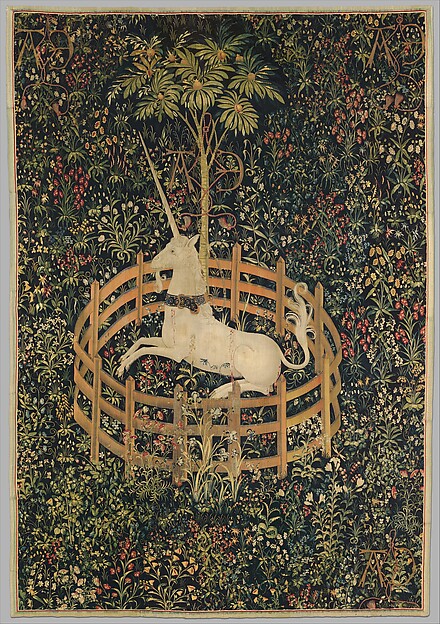
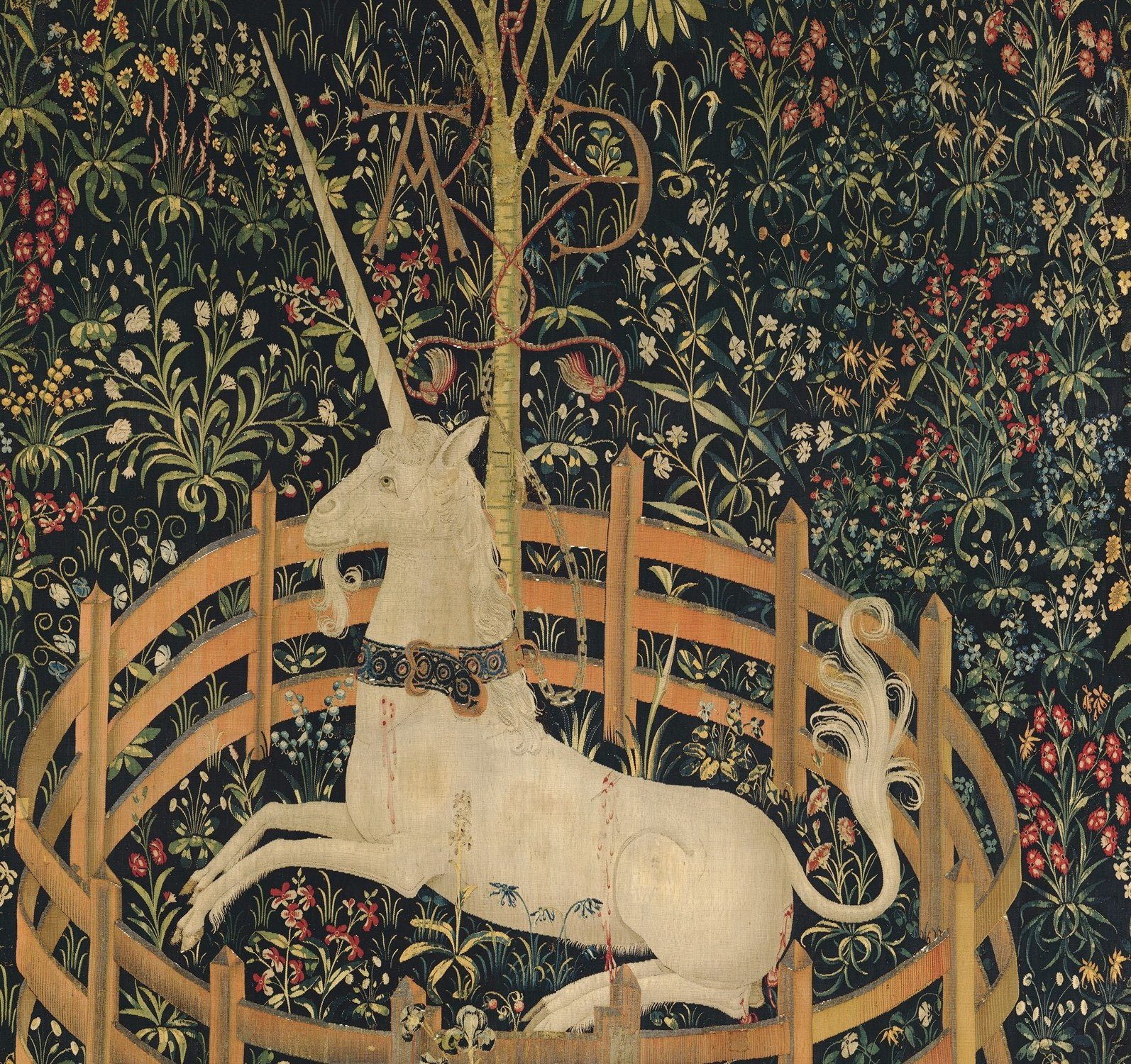
The unicorn enclosed in a garden beneath a pomegranate tree VII
The famous finale

Alive in the garden

Open the scene  →

Choose your path

What are you curious about?

The unicorn dipping its horn into a fountain

One detail to notice

Why is the unicorn touching the water?

People once believed a unicorn’s horn could detect or neutralize poison. In this scene, the animals wait while the unicorn lowers its horn toward the fountain—a magical idea rendered with careful observation of real birds, plants, and water.

The mixture of fantasy and natural detail is part of what makes the Unicorn Tapestries feel so alive.

Explore the fountain scene

Le guide en français

Deux cycles.
Une licorne.
Mille mystères.

10 articles en français

Explorez La Dame à la licorne, La Chasse à la licorne, leur fabrication et les symboles qui fascinent depuis cinq siècles.

About the publication

A focused history radiating out from the objects

The publication begins with The Hunt of the Unicorn and The Lady and the Unicorn, then follows their wider world: design and weaving, patronage, rooms, collecting, museum records, display, photography, and reproduction.

Articles compare collection records and established sources, identify uncertainty, and separate historic woven objects from modern printed decorative wall hangings.

Good questions

A quick introduction

What is the story of the Unicorn Tapestries?

The surviving works commonly presented as the Hunt of the Unicorn depict hunters discovering, pursuing, and capturing a unicorn. The separate garden image shows the unicorn alive inside a fence; its exact relationship to the hunt sequence remains debated.

What does the unicorn symbolize?

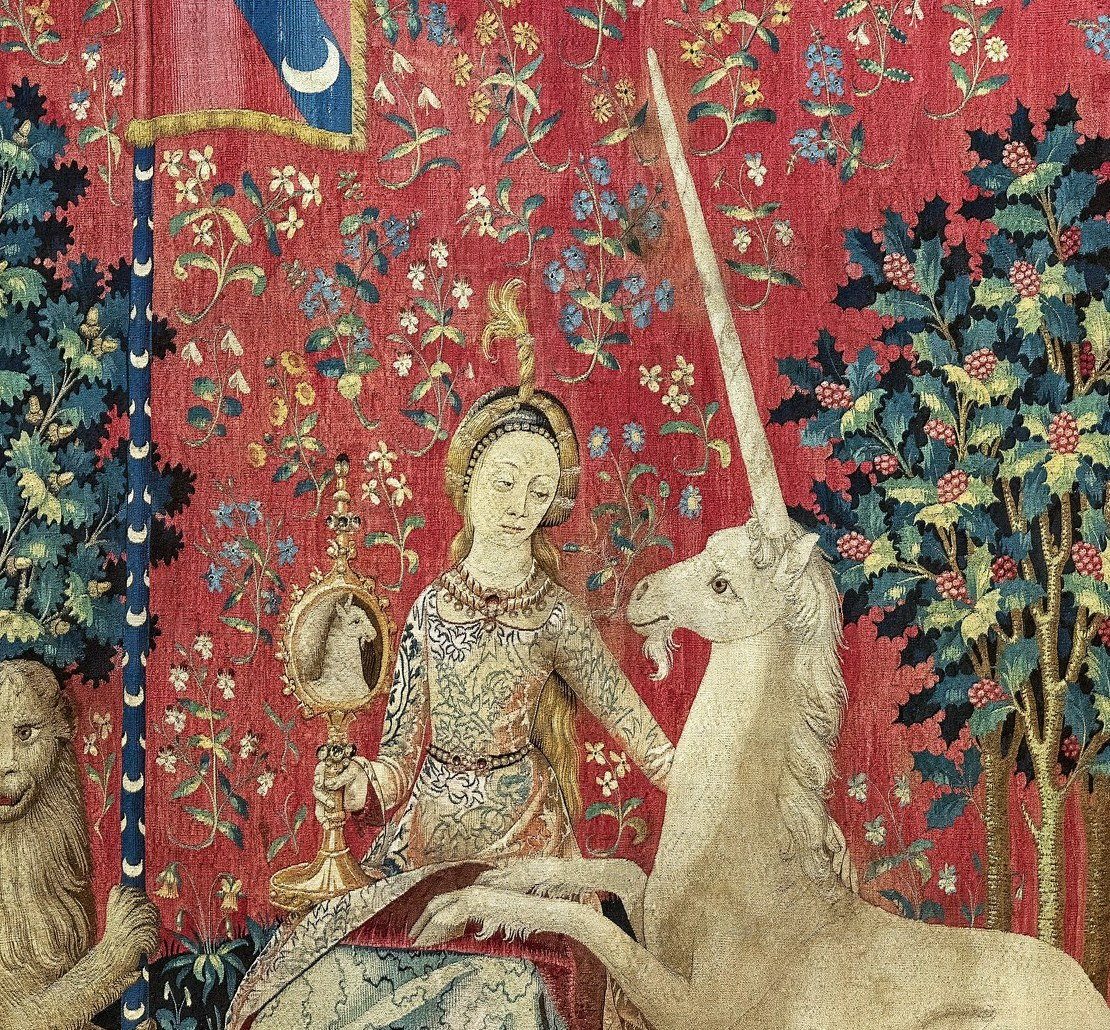
There is no single settled meaning. The unicorn can suggest purity, love, marriage, power, or Christ. The tapestries are compelling partly because courtly and religious meanings can overlap.

Where are the famous Unicorn Tapestries?

The Hunt of the Unicorn belongs to The Metropolitan Museum of Art and is associated with The Met Cloisters in New York, although gallery display can change. The separate Lady and the Unicorn series is held by the Musée de Cluny in Paris.

When were they made?

The Hunt of the Unicorn tapestries are dated around 1495–1505 and associated with the South Netherlandish tradition. The Met records wool warps with wool, silk, silver, and gilt wefts.

Keep exploring

There is more hiding in the garden.

Browse the encyclopedia by story, symbol, animal, flower, or craft.

Enter the encyclopedia