Renaissance Tapestries: Famous Stories Woven on a Grand Scale
A friendly guide to Renaissance tapestries, from Raphael’s Acts of the Apostles to royal hunts, classical heroes, and court festivals.
Reviewed and updated
- Peak period
- The 1400s and 1500s
- Leading center
- Brussels and other weaving cities in the Low Countries
- Favorite subjects
- The Bible, classical history, hunts, virtues, and royal spectacle
- Surprising truth
- The grandest tapestries could cost more than paintings
Imagine entering a palace and discovering that the walls have disappeared behind forests, battles, saints, emperors, animals, and skies made from thread. That was the special power of a Renaissance tapestry. It did not simply decorate a room; it rebuilt the room as a woven world.
During the fifteenth and sixteenth centuries, Europe’s richest patrons treated tapestry as one of the grandest forms of art. Kings exchanged sets as diplomatic gifts. Popes commissioned them for sacred ceremonies. Courts used them to turn temporary lodgings into instant theaters of authority.
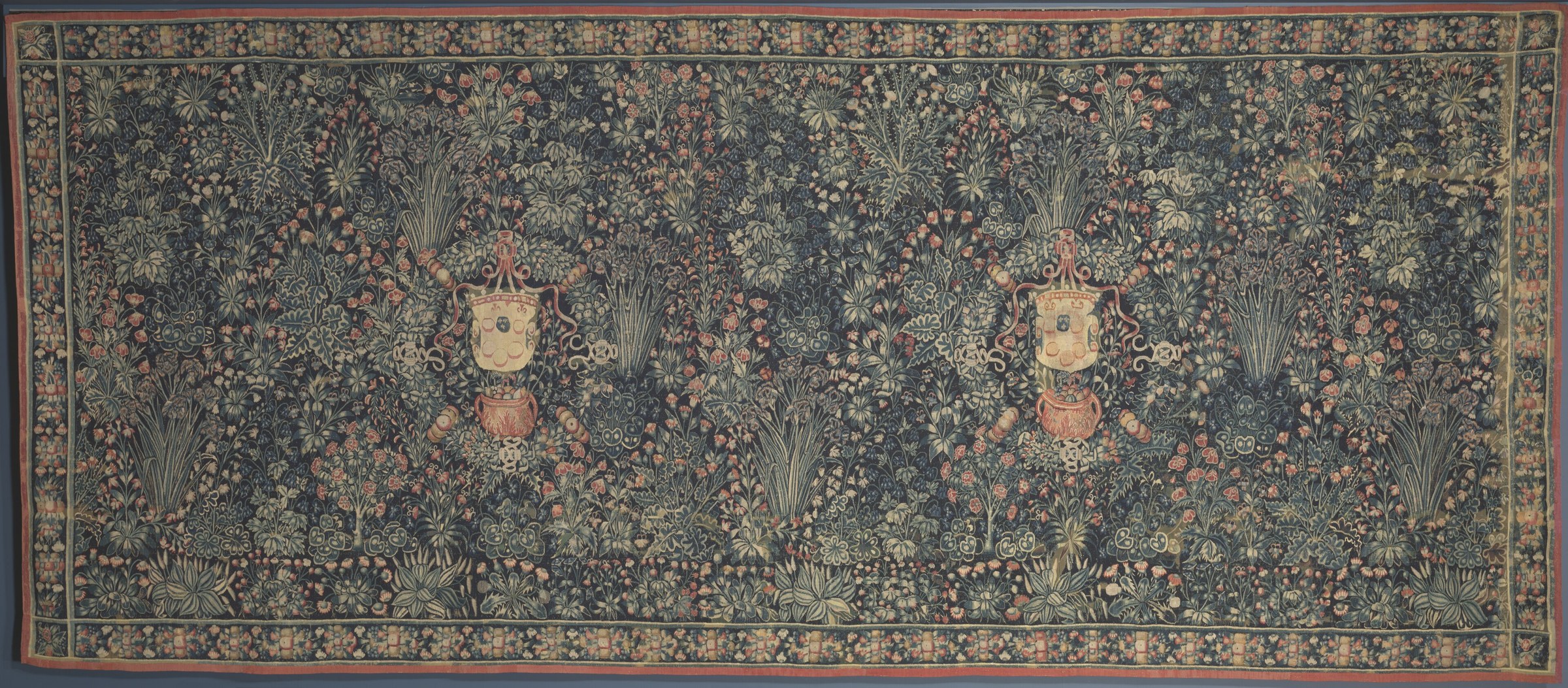
Unicorn tapestries belong near the beginning of this story. Their dense flowers and courtly mysteries look back toward the late Middle Ages, while the great narrative sets that followed embraced Renaissance painting, architecture, classical history, and spectacular human figures.
How a Renaissance tapestry began
The process required several kinds of talent.
A patron first chose a subject and commissioned a design. An artist or workshop developed the composition. A full-size cartoon guided the weavers, who translated paint or drawing into thousands of decisions about colored thread.
The finest workshops clustered in the Low Countries, especially Brussels. They could turn an Italian painter’s design, a French court subject, or a Habsburg political message into a vast textile made from wool, silk, and glittering metal-wrapped thread.
The designer received fame more often than the weaver, but the image could not exist without both. A painted hand had to become interlocking shapes of weft. A cloudy sky needed a limited family of dyed yarns. A face that looked effortless from across a hall required extraordinary control at the loom.
Secular subjects filled Renaissance walls
Tapestries were not limited to religious stories. Court patrons commissioned hunts, festivals, military histories, classical mythology, heraldry, personified virtues, and ornamental designs. These subjects could entertain while also making claims about ancestry, education, territory, wealth, or the qualities expected of a ruler.
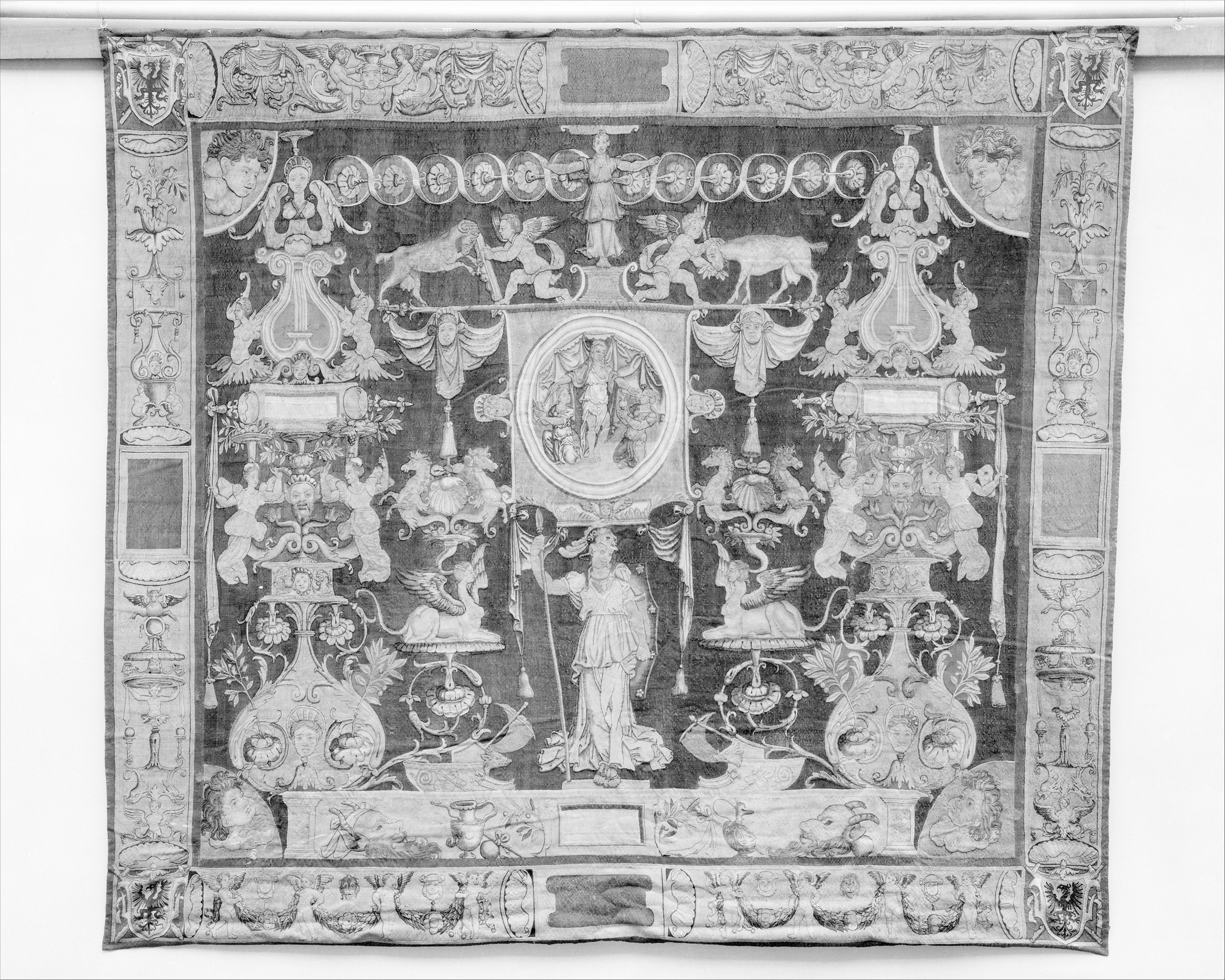
The visual treatment mattered as much as the subject. A hunt could map a court onto a recognisable landscape. A festival could preserve selected faces within an idealised spectacle. A figure such as Minerva could signal classical learning while elaborate grotesques demonstrated familiarity with ancient Roman ornament. None of these works is a simple documentary picture; each converts court priorities into a designed textile environment.
Six famous Renaissance tapestry worlds
Raphael’s Acts of the Apostles
Pope Leo X commissioned a set illustrating the lives of Saints Peter and Paul for the Sistine Chapel. Raphael and his workshop designed the cartoons in Rome, and the tapestries were woven in Brussels in the workshop of Pieter van Aelst.
The result joined two artistic worlds: monumental Italian figures and the color, texture, and luxury of northern European weaving. The surviving Raphael Cartoons are now among the treasures of the Victoria and Albert Museum.
What to notice: figures communicate through broad gestures that remain readable from a distance. These are scenes designed for architecture and ceremony, not intimate close looking alone.
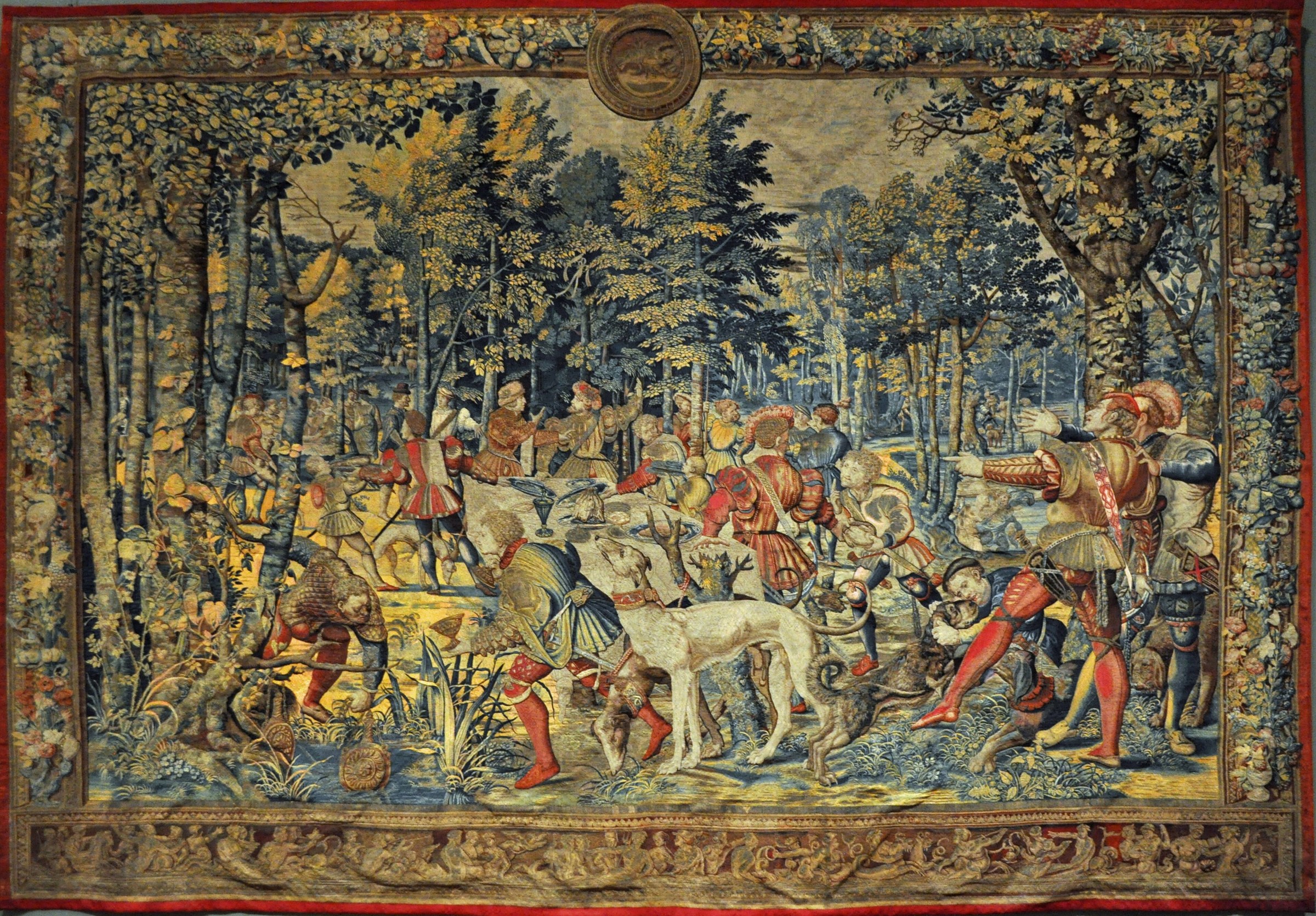
The Hunts of Maximilian
This celebrated hunting cycle follows the months of the year through landscapes associated with the Habsburg court. Riders, dogs, woodland, water, and distant buildings turn the hunt into a portrait of territory as well as aristocratic leisure.
Unicorn fans will recognize the visual excitement of pursuit, but the goal is different. The quarry is real, the landscape is more spatially continuous, and the court’s mastery of land becomes part of the subject.
What to notice: look past the action to the horizon. Landscape is becoming a stage with believable depth rather than a patterned field.
The Story of Abraham
Henry VIII owned an exceptionally lavish set telling the biblical story of Abraham. Biblical narrative offered drama, moral authority, family conflict, travel, and divine promise—all suitable for a king interested in lineage and magnificence.
The tapestries demonstrate how a familiar sacred story could become a political environment. Displaying Abraham at court was not the same as quietly illustrating scripture in a book.
What to notice: architecture, crowds, and costumes make ancient history look uncannily like a sixteenth-century royal present.
Los Honores
Created for the young Charles V, the monumental Los Honores tapestries presented virtues, fame, fortune, justice, and other forces that shape an ideal ruler. The imagery can feel like an enormous pageant in which abstract ideas have walked onstage as people.
What to notice: identify the central personification first, then read surrounding figures like supporting characters in a visual argument about rule.
The Story of Scipio
Renaissance courts loved examples from classical history. The Roman general Scipio Africanus offered military victory, self-control, and civic virtue. Designs associated with Giulio Romano helped turn the ancient past into sweeping, muscular drama.
What to notice: Roman history is shown through Renaissance bodies, buildings, armor, and theatrical movement. Historical accuracy mattered less than making antiquity feel exemplary and alive.
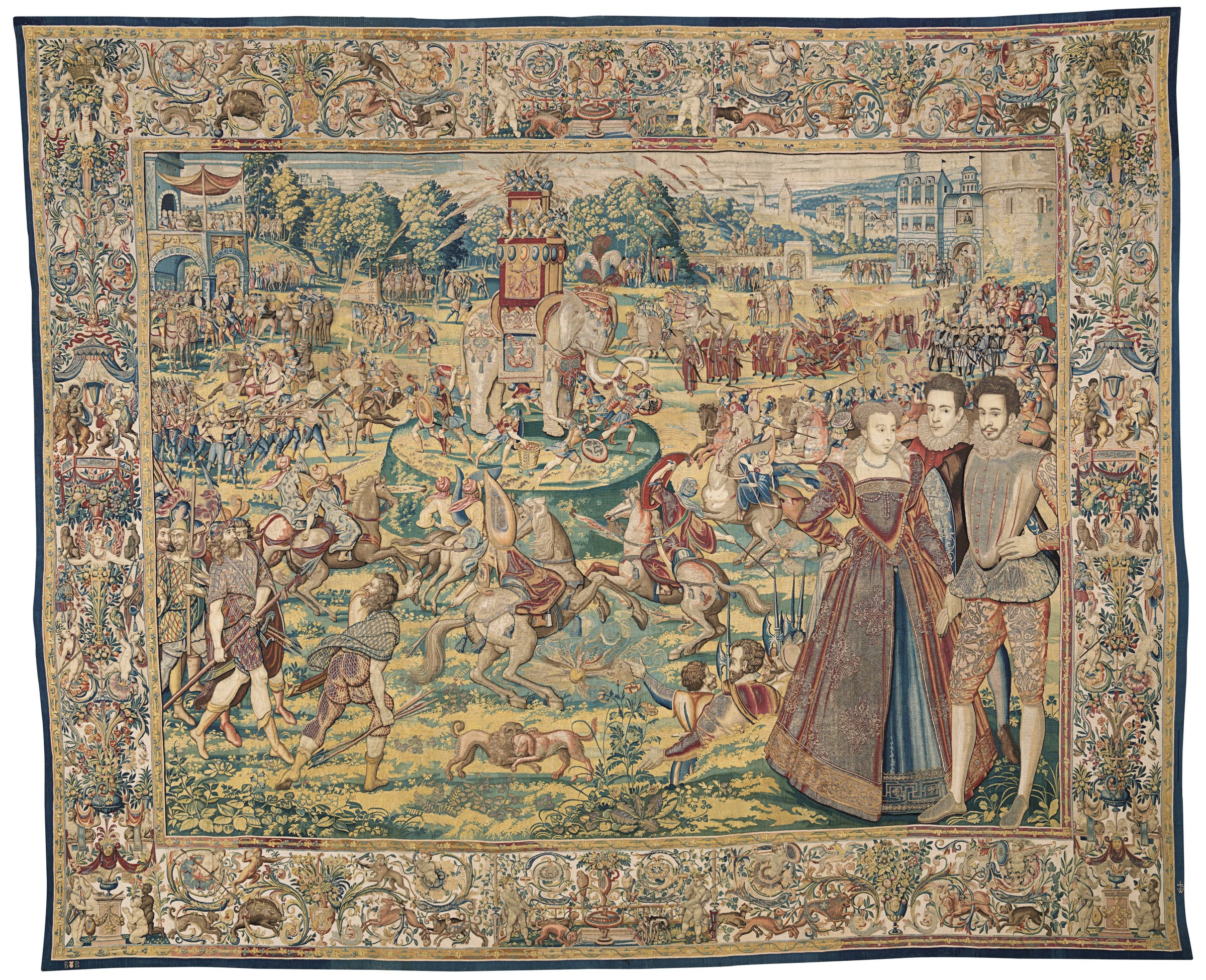
The Valois Tapestries
The Valois Tapestries, now in the Uffizi, are crowded with festivals, entertainments, and members of the French court. Their surfaces can feel almost dizzying: elaborate clothing, water spectacles, architecture, and overlapping groups compete for attention.
These are not calm records of events. They are memory, display, and political imagination woven together.
What to notice: find the important portrait figures, then let your eye travel outward into the surrounding celebration.
From millefleurs to deep space
Place a Lady and the Unicorn tapestry beside a scene designed after Raphael and the difference is immediate.
The Lady stands against a red field where flowers float like stars. Raphael’s figures occupy architectural space, turn their bodies dramatically, and create a scene with foreground, middle ground, and distance.
That does not make one old-fashioned and the other superior. They pursue different kinds of wonder. Millefleurs tapestry creates an enchanted surface. High Renaissance design creates monumental theater. Weavers were capable of making both convincing.
Tapestry as portable power
Paintings usually belonged to a particular wall. Tapestries could move.
A court might hang them for a wedding, religious feast, diplomatic meeting, or triumphal entry, then pack them away and display them somewhere else. Their size softened acoustics and drafts, but their greatest function was imaginative: they surrounded living people with chosen histories and values.
The subject told visitors what mattered. Troy suggested ancient heroism. Abraham suggested lineage. Hunts suggested command over land and animals. Classical victories suggested disciplined rule. Court festivals projected magnificence and access to power. Gold thread made every message shimmer.
What unicorn tapestries contribute to the story
The famous unicorn sets sit at a fascinating threshold. They share the costly workshop culture and courtly ambition of Renaissance tapestry, but much of their visual language remains late medieval: heraldic animals, compressed spaces, tiny plants, allegory, and a taste for meanings that never become entirely fixed.
That is why they are such a rewarding doorway into the wider subject. Begin with the unicorn and you soon encounter weaving workshops, trade, gardens, hunting rituals, poetry, religion, marriage, fashion, and the ambitions of Renaissance courts.
Next, explore the many types of tapestry or return to the complete Unicorn Tapestry guide.
Questions curious readers ask
What is a Renaissance tapestry?
A Renaissance tapestry is a woven wall hanging produced during the European Renaissance, often from a full-size design by a painter and woven in specialist workshops using wool, silk, and sometimes precious metal thread.
Why were tapestries important during the Renaissance?
They transformed large rooms, displayed wealth and political messages, softened cold interiors, and could travel with a court from one residence to another.
Where were the finest Renaissance tapestries made?
Many of the most prestigious sets were woven in Brussels and other centers in the Low Countries, even when their designers and patrons lived elsewhere.
Did Raphael design tapestries?
Raphael designed full-scale cartoons for the Acts of the Apostles tapestries commissioned for the Sistine Chapel. Specialist weavers in Brussels translated those painted designs into cloth.