The Metropolitan Museum of Art, Open Access · CC0 / The Met Open Access
The Hunt of the Unicorn Tapestries: Story and Meaning
Follow the Hunt of the Unicorn tapestries scene by scene, from the first pursuit to the mysterious Unicorn in Captivity.
Reviewed and updated
- Date
- Around 1495–1505
- Surviving group
- Seven hangings, including fragments
- Made in
- The Low Countries
- Collection
- The Metropolitan Museum of Art
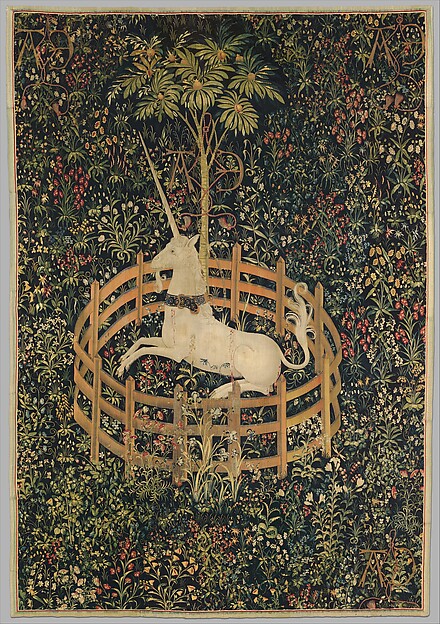
The Hunt of the Unicorn tapestries begin like a courtly adventure and end like a dream. Hunters ride out with hounds and horns. They discover a unicorn near a fountain, close in, and fight a creature far more dangerous than its modern storybook image suggests. Then comes the puzzle: the unicorn appears alive again beneath a pomegranate tree, loosely chained inside a garden fence.
Made around the turn of the sixteenth century, the surviving hangings are now among the best-known works at The Met Cloisters. Their original designer, weavers, patron, and exact meaning remain uncertain.
The story at a glance
The modern sequence moves through seven surviving hangings and fragments:
- The hunters set out.
- The unicorn is discovered at a fountain.
- The chase crosses a stream.
- The unicorn defends himself.
- A maiden helps bring about the mystic capture.
- The unicorn is killed and carried to a castle.
- The unicorn rests in captivity.
The titles have varied over time, and parts of the sequence are reconstructed. Think of it less as a perfectly preserved picture book and more as a magnificent story with a few pages damaged or missing.
What makes the hunt so enjoyable to explore?
The tapestries work at two speeds. From across a room, they deliver action: charging hounds, raised spears, bright clothing, and the pale unicorn twisting through dark greenery. Up close, the chase slows into dozens of discoveries.
Look for rabbits hiding among plants, reflections in water, the different breeds and expressions of the dogs, and the tiny flowers that turn the ground into a woven meadow. Human glances also matter. A hunter looking sideways may point your eye toward the next event before a weapon does.
What does the hunt mean?
Medieval stories described the unicorn as fierce and impossible to take by force, but vulnerable to a maiden. Courtly audiences could understand hunting as a language of pursuit, desire, loyalty, marriage, status, and control.
The tapestries do not label one answer as correct. Their legendary, romantic, and aristocratic associations can overlap. The final unicorn is chained, yet the chain looks weak. It is fenced in, yet the fence is low enough to cross. Drops on its coat may suggest wounds, ripe fruit, or both.
The most honest interpretation begins with that tension: the animal appears captive and unconquered at the same time.
A good first-looking game
Choose one panel and find:
- one animal that notices something before the people do;
- one plant you recognize;
- one line—spear, leash, gaze, or stream—that moves your eye;
- one detail that complicates the scene’s apparent mood.
That is enough to turn a famous image into an encounter. When you are ready to compare it with a very different unicorn world, visit The Lady and the Unicorn tapestries.
Questions curious readers ask
What is the story of The Hunt of the Unicorn?
Hunters seek, attack, and capture a unicorn. The final famous hanging shows the animal alive inside a flower-filled enclosure, making the ending mysterious rather than straightforward.
What does The Unicorn in Captivity mean?
It has been interpreted through love, marriage, survival, renewal, or the idea of a wild creature willingly contained. No single interpretation explains every detail.
Where can I see The Hunt of the Unicorn tapestries?
The set belongs to The Metropolitan Museum of Art and is associated with The Met Cloisters in New York. Check current gallery listings before visiting.